

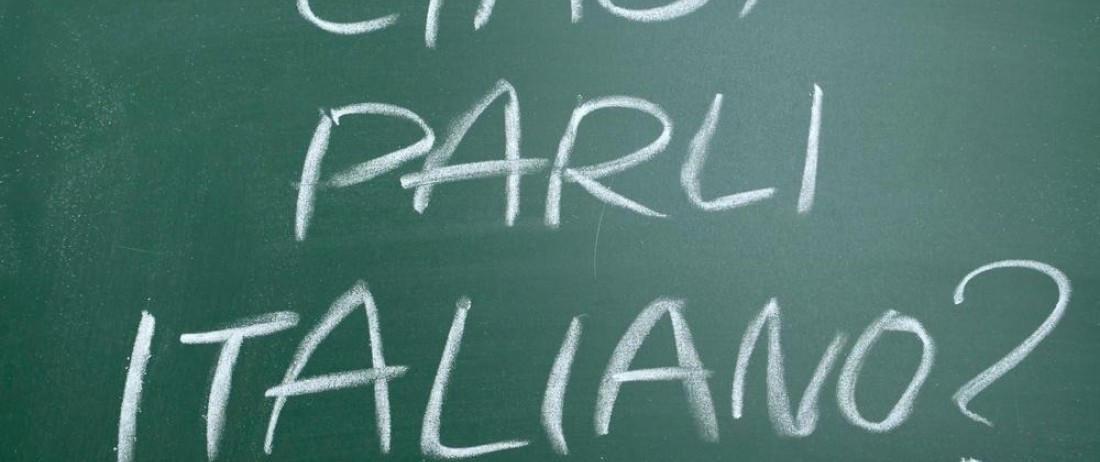
Learning a new language often starts with a simple question: how long will it take?
When it comes to Italian, there isn’t a single answer. Some people reach conversational confidence in a few months, while others take longer to feel comfortable speaking. The timeline depends on several factors—your starting level, how often you study, your learning method, and, most importantly, the environment in which you learn.
Understanding these variables is essential if you want realistic expectations and effective results. Because the real question is not just how long it takes to learn Italian, but how you choose to learn it.
If you are starting from zero, the first phase is usually about building a foundation.
In the beginning, progress feels fast. You learn basic vocabulary, simple sentence structures, and common expressions. Within a few weeks, you may already be able to introduce yourself, order food, and understand basic conversations.
However, moving from beginner to intermediate is where things become more complex.
At this stage, you need to expand your vocabulary, understand verb tenses, and improve listening skills. This transition can take a few months, depending on how intensively you study and how much you practice speaking.
What often slows learners down is not the difficulty of the language, but the lack of real interaction.
Fluency is not a fixed milestone. It can mean different things depending on your goals.
For some, fluency means being able to travel and communicate in everyday situations. For others, it involves discussing complex topics, working in Italian, or understanding native-level conversations.
In general terms, reaching a solid conversational level can take anywhere from a few months to a year. Achieving advanced fluency takes longer and requires consistent exposure.
But there is one key factor that can significantly shorten this timeline: immersion.
The environment in which you learn plays a crucial role in how quickly you improve.
Studying Italian in a traditional setting—through books, apps, or occasional lessons—can give you knowledge, but often lacks practical application.
When you choose to learn Italian in Italy, everything changes. The language is no longer limited to study time. It becomes part of your daily routine. You hear it constantly, use it in real situations, and adapt to it naturally.
You order coffee in Italian. You ask for directions. You listen to conversations around you. You make mistakes and correct them immediately.
This constant exposure creates a learning rhythm that is difficult to replicate elsewhere. Instead of practicing occasionally, you are practicing all the time.
There is no fixed number of weeks or months that guarantees success. What matters more is how your time is structured.
Two students can spend the same amount of time studying Italian and achieve completely different results. One may attend lessons twice a week and rarely practice outside of class. The other may study daily, interact with native speakers, and immerse themselves in the language.
The second student will progress much faster—not because of talent, but because of consistency and exposure.
This is why learning Italian in Italy is often more effective. It naturally increases the amount of time you spend engaging with the language, without requiring additional effort.
It depends on what you mean by “learn”.
In a few months, you can reach a level where you understand everyday conversations and express yourself in common situations. You can navigate daily life, interact with locals, and feel more confident using the language.
However, mastering Italian to a high level requires more time.
The key is to focus on progress rather than perfection. Each stage builds on the previous one, and every interaction contributes to your improvement.
When you learn Italian in Italy, these interactions happen continuously, which makes a noticeable difference in a shorter period.
Several factors influence how quickly you improve:
A structured Italian course combined with real-life practice creates the ideal conditions for learning.
Italy offers many destinations for language learners, but not all environments provide the same advantages.
Rome stands out because it combines constant exposure, variety, and accessibility.
In a city like Rome, you are constantly surrounded by Italian in its natural form. You encounter different situations, from casual conversations to more complex interactions, which helps you develop flexibility in the language.
At the same time, Rome is well connected, especially through Roma Termini. This makes it easy to move around the city and explore other parts of Italy, enriching your experience even further.
This combination of immersion and practicality creates an environment where learning becomes part of your daily life.
While immersion is essential, structure is equally important. Italian language schoolsprovide guidance, correction, and a clear learning path. They help you organize your study, understand complex concepts, and improve systematically.
The most effective approach is a combination of both: structured lessons and real-world practice.
Choosing a school that offers not only courses, but also accommodation and cultural activities, can make a significant difference. It simplifies your experience and ensures that the language remains present throughout your day.
This is where learning becomes continuous, not limited to specific hours.
If you want to reduce the time it takes to learn Italian, focus on how you engage with the language.
Use it as much as possible, even when you feel unsure. Listen actively, observe how people speak, and try to adapt.
Avoid waiting until you feel ready. Confidence comes from practice, not the other way around. And most importantly, choose an environment that supports your learning process. Because the right context can turn months of study into real, practical progress.
If your goal is to learn Italian effectively and in a shorter time, the environment you choose will make all the difference.
DILIT offers a structured learning experience in a central area of Rome, close to Roma Termini. With courses for all levels, accommodation options, and cultural activities, it allows you to combine lessons with real-life immersion.
Instead of studying Italian occasionally, you experience it every day.
Book your Italian course in Rome with DILIT and start learning in a way that is more natural, faster, and truly effective.
Test your level
Contact us


DI.L.IT. Soc. Coop.va rl. - Via Marghera, 22 Roma - P.IVA IT01094361001